LEAD Program at Wheaton College
At its core, our LEAD program seeks us to embody God’s intention to use our gifts through professional and sacred vocations to be integrated with our walking with Him in His purpose to redeem all of creation.

At its core, our LEAD program seeks us to embody God’s intention to use our gifts through professional and sacred vocations to be integrated with our walking with Him in His purpose to redeem all of creation.
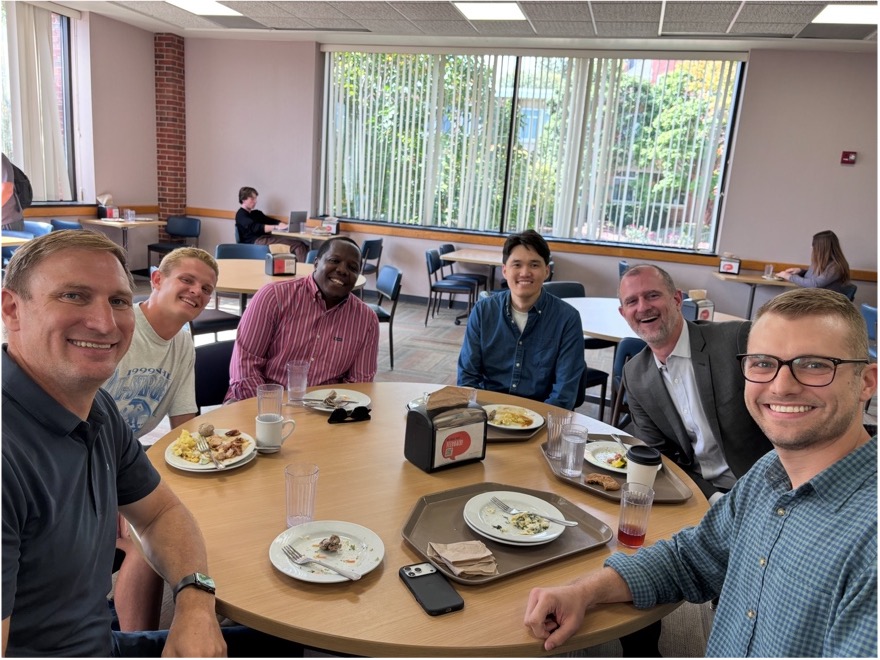
LEAD M.A. Program Director Dr. Todd Wilson at lunch with students.
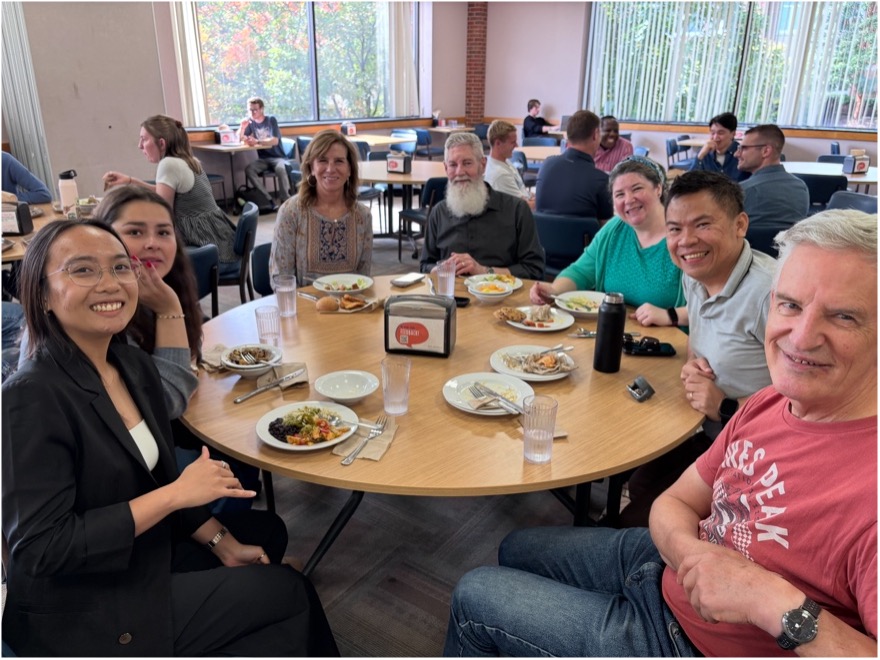
Dr. Rob Gallagher (faculty, EVAN 558 Personal Development & Leadership) and Ms. Wendy Larson (Dir. of Operations and Student Support) at lunch with students.
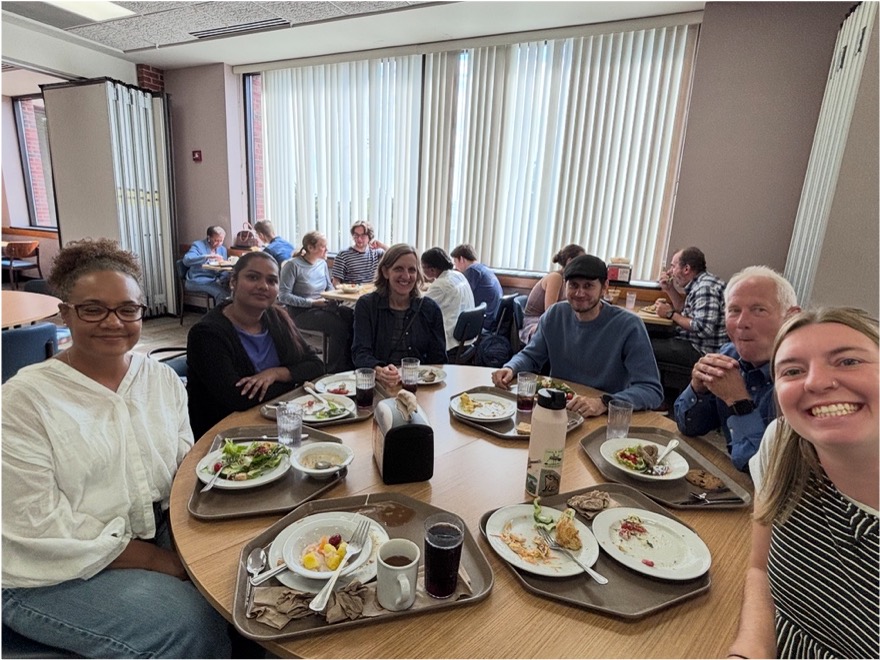
Dr. Dave Sveen (faculty, LEAD 655 Leading Effective Organizations) at lunch with students.
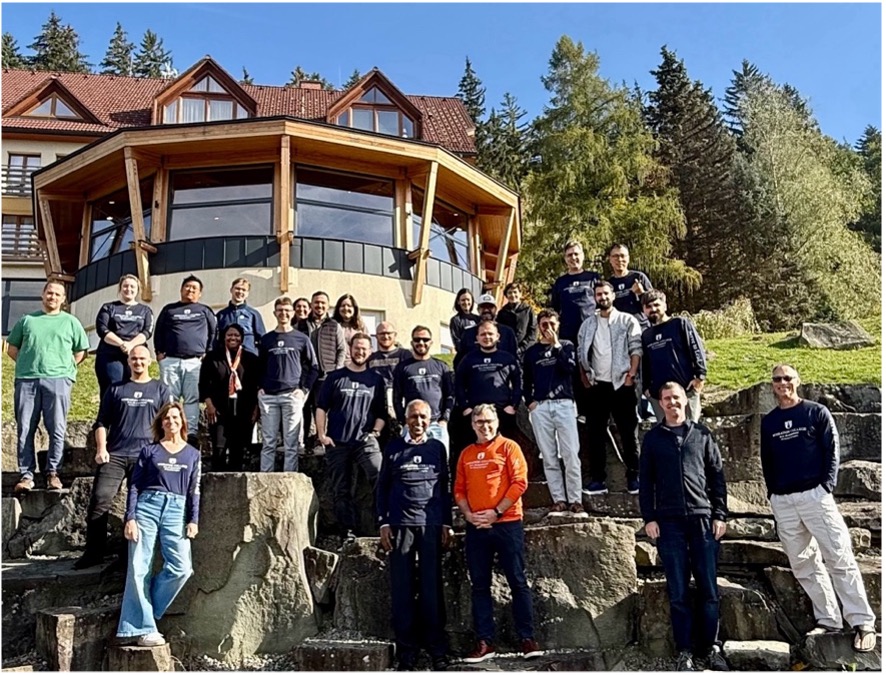
European cohort students in Czechia for hybrid classes with Dr. Shelette Stewart, Dr. Junias Venugopal, Prof. Terry English, and Ms. Wendy Larson. (Missing the energetic Dr. David Van Dyke) We’re sporting the snazzy LEAD shirts! Get one from the LEAD Program Office!
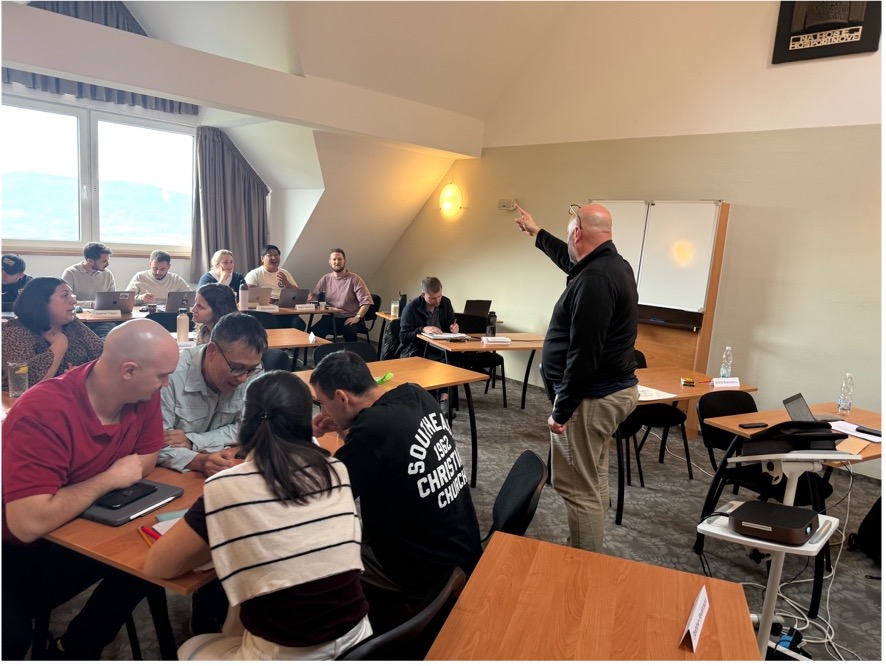
Students in LEAD 645 Mental Health and the Leader course with Dr. David Van Dyke.
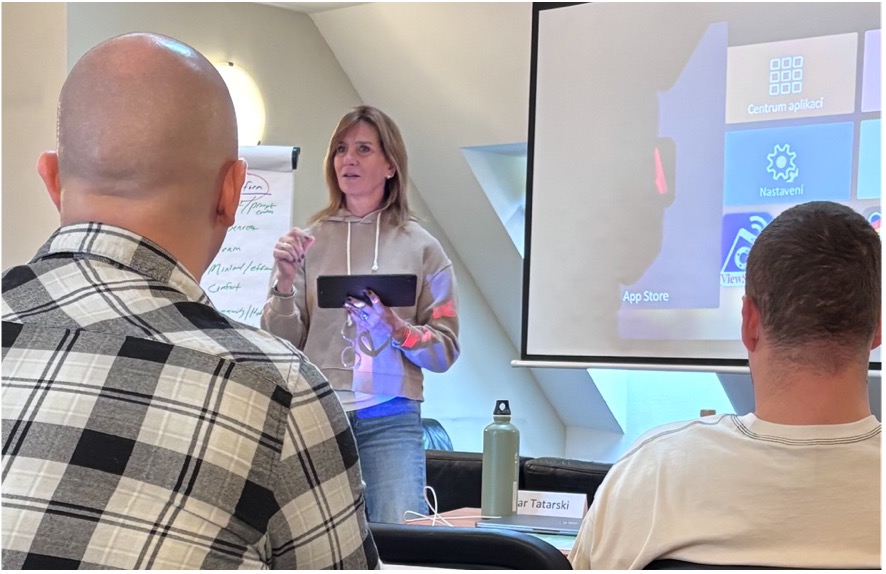
Ms. Wendy Larson academic advising by engaging students in discussing curricular schedule options.
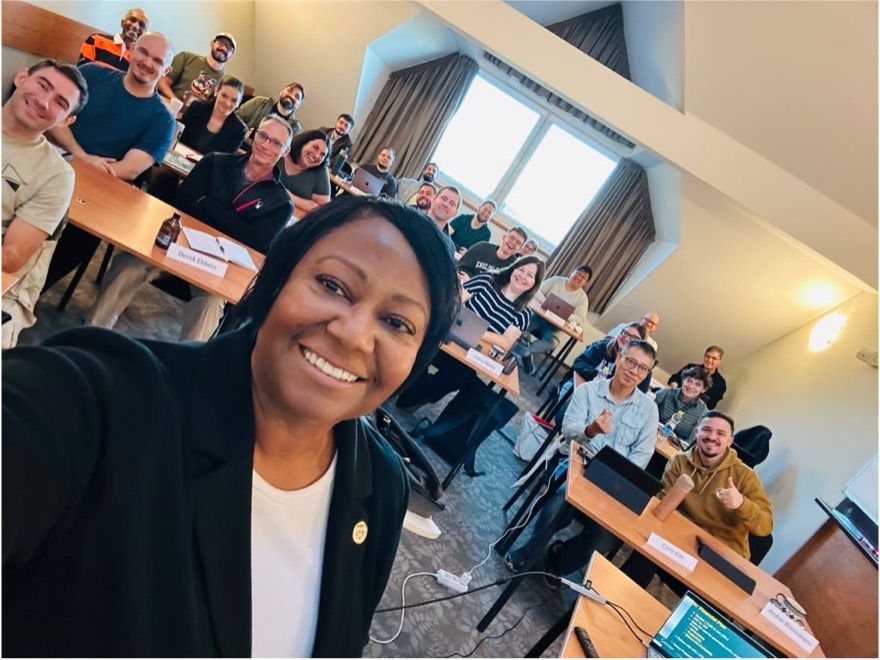
Students in LEAD 652 Strategic Management course with Dr. Shelette Stewart.
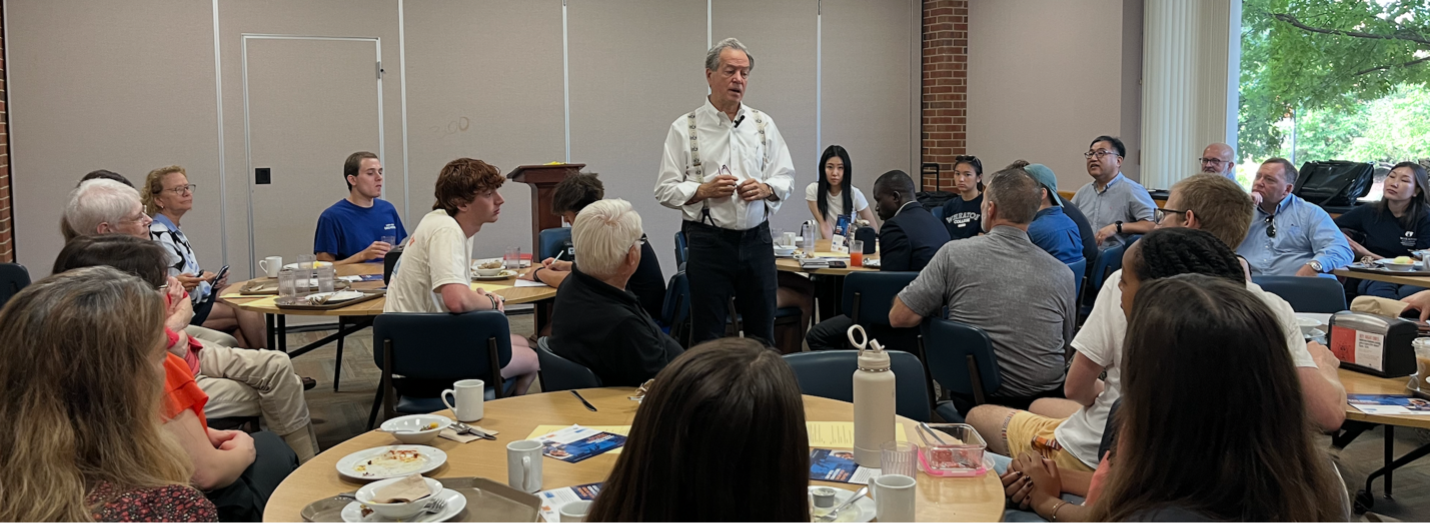
Breakfast seminar sponsored by our Business and Economics department on Ethics with David Miller, director of Princeton Univ.’s Faith & Work Initiative. This also highlights the 5-year accelerated B.A.-M.A. program.
Please contact Wendy Larson and/or Katrina Roser for
further information.
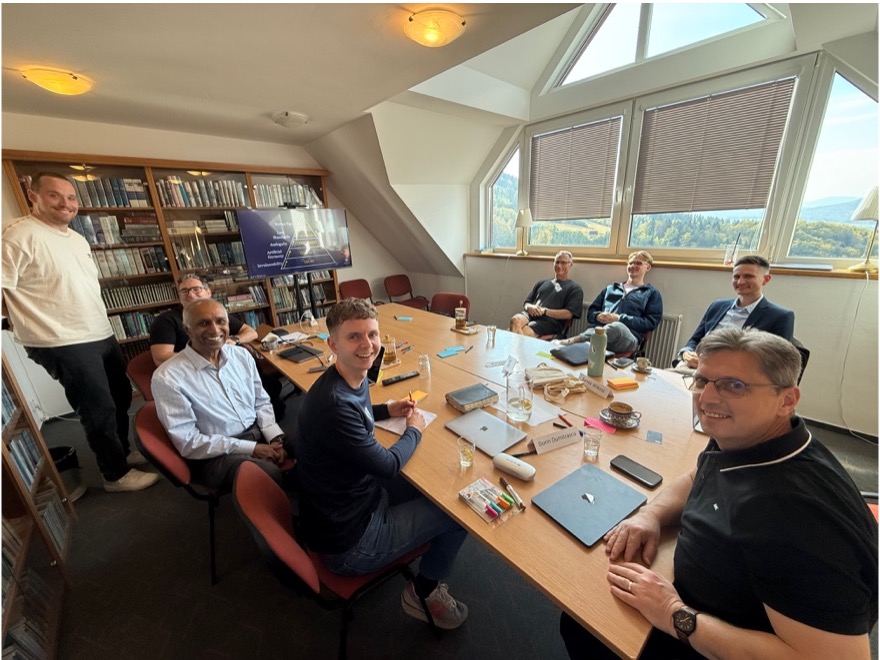
Students in LEAD 662 Leading Multicultural Teams course with Prof. Terry English and Dr. Junias Venugopal.
We praise God for the students who graduated from our LEAD M.A. program at the May ’26 Commencement, some of whom are shown in the picture. Additionally, we are proud of the following awardees for the 25-26 academic year:

 As I (Hannah Wood, Wheaton College CVC staff) prepared to take LEAD 655 Leading Effective Organizations: this fall, I was unsure what to expect. I love learning, so even after reading the book on finance and declaring that I had clearly not missed my calling to be in finance, I looked forward to how Dr. David Sveen would bring the content to life. Within the first day, I saw the value of learning essential principles that support a healthy organization and understanding the value of the operational side of a business.
During this class, Dr. Sveen drew our attention to many non-profits doing work locally and abroad, that were examples of the concepts we were discussing in class. He shared about other Wheaton M.A. in Leadership students and what they have gone on to create, plus Dave Patty from Josiah Venture was a guest speaker in class. Dr. Sveen himself comes with many years of experience in business, embarking on many different business ventures. During our time in the class, we learned about his current organization, Cedarstone, and saw the concepts we were talking about in class fleshed out in how he runs this company. Hearing how others created organizations was extremely inspiring to me and my classmates, as we heard about challenges and successes and wrestled with these during our class discussion.
Our class finished with instructions for how to create a business proposal. I will be spending time in the next few months creating two different business proposals for two personal ideas I have been thinking about lately. This class helped me understand how to think through this in a systematic and organized way and then create a strategic plan that helps me take action and move forward. I never thought of myself as someone who starts a business, but through this class I realized that I not only have ideas, but now I have the tools to see what is possible!
 How do I (Dome Danciu, European Cohort student) respond when anxiety rises in a group? Do I try to fix the problem, take on more than I should, or pull away? How can I differentiate my emotions from the problems that arise around me? The course LEAD 645 Mental Health and the Leader helped me consider these reactions as part of a larger relational system. In class, Dr. David Van Dyke taught us to notice how anxiety moves through families and organizations, and how a leader’s presence can affect the system.
The idea of emotional triangles was especially useful. When tension between two people draws in a third, does my involvement help resolve it, or only ease discomfort? Learning to notice that pull gives me a chance to pause, reflect, and choose a more helpful response. I found the genogram exercise valuable. What patterns from my family shape the way I lead today? What roles do I slip into when people around me are anxious? These questions help me see my leadership with curiosity and less judgment.
The course challenged me to think about balance. If I take on too much, am I preventing others from growing into responsibility? If I avoid giving direction, am I leaving people without what they need? Differentiation offered a practical guide: staying connected to others while holding onto values and responsibilities.
We considered how trauma and stress affect the body and our capacity to respond. What signals tell me I am becoming reactive or shutting down? Paying attention to bodily cues and turning to prayer are practices I can use to regain steadiness. Caring for my inner and spiritual life is part of becoming a healthier leader.
Going forward, I want to keep practicing listening before acting, resisting the urge to solve every tension, and making room for honest conversation and shared responsibility. When I notice my own reactions, how might I help others feel able to contribute and grow? That is a question I want to keep carrying into my leadership.
 One of my (Lambert Bariho, Wheaton College Grad School student) motives in pursuing an MA in Leadership with a Global Leadership concentration is a desire to finish well (Matthew 25, 2 Timothy 4:6-8). By God’s providence, the first course I took this fall—EVAN 558: Personal Development and Leadership—taught by Dr. Robert L. Gallagher, has been a steppingstone in that direction.
The first part consisted of textbook interactions where we read and wrote papers on 5 different books all focusing on different challenges in the life of a leader. Part two was an intensive week where my classmates and I got the privilege of sitting under the teaching of four different lecturers. The last part is about writing two papers: one on assessing our personal leadership journey and the other on designing a personal development plan.
During the intensive, from his own vast experience, Dr. Gallagher taught us a model of effective ministry that he calls the pneumatic ministry praxis. He asserts that being part of God’s Mission requires a continual movement of reflection and actions involving the Holy Spirit, the Word of God, history of the ministry, context and culture in which the ministry occurs. Mrs. Jayna Gallagher, an educator and spiritual director, shared on the role of spiritual disciplines in spiritual formation.
Due to health challenges that occurred for Dr. Gallagher on Wednesday, Dr. Junias Venugopal taught us the entire day on Thursday instead of only the morning as initially planned. He taught us leadership from existing ideas and theories starting with the Great Man Theory. The final day, Dr. James Wilhoit focused on praying without ceasing and biblical meditation. Through it all, it was clear that the four lecturers drew from their personal walks with God and, from different perspectives, emphasized the need for spiritual formation in leadership development.
We are excited to offer these LEAD required and concentration/ elective courses this Spring ’27. If you are not taking a concentration program, you may choose to take LEAD 617 Data Analysis for Decision Making (2) and/or PSYC 531 Psychology of Sports Performance and Coaching (2) as electives in your LEAD M.A. program.
However, if you are in the Managing Nonprofits or the Sports Leadership concentrations, please be sure to take LEAD 617 Data Analysis for Decision Making (2) this Spring ’27 as it won’t be offered again till Spring 2029! Similarly, PSYC 531 Psychology of Sports Performance and Coaching (2) is a required concentration course in Sports Leadership and needs to be taken now in Spring ’27 or you’ll have to wait till Spring ’29 to take it next.
Please consult with the Director of Operations and Student Support and Asst. to the Dean, Wendy Larson if you have any questions about the courses or schedule you are following or questions regarding CRN (especially for BITH 565) as you register as she provides academic advising for our LEAD students. Contact Wendy
For additional details and information for Spring 2027 course offerings, please contact LEAD Office Coordinator Cassidy Larson. Contact Cassidy.
| Course | Title | Mode | CRN | Faculty |
|---|---|---|---|---|
| LEAD 512 | Leadership and Spiritual Formation (4) | Online | 13495 | Junias Venugopal |
| LEAD 565 | Christian Theology | Online | * | BTS Faculty |
| LEAD 652 | Strategic Management | Online | 12922 | Todd Wilson |
| PSYC 531 | Psychology of Sports Medicine and Coaching (2) | Online | 13859 | Ray Phinney |
| LEAD 617 | Data Analysis for Decision Making (2) | Online | 14039 | Sawyer Nyquist |
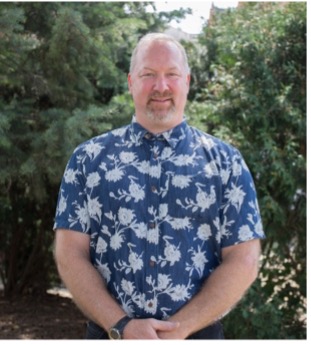 Raymond Phinney
Wheaton faculty Raymond Phinney will teach PSYC 531 Psychology of Sports Performance and Coaching, which will be helpful for anyone who wants to use psychological skills to improve their performance in any field particularly athletics. This course will survey the theory, research, and applications of psychology pertaining to performance, coaching and leadership in sports. Students study the psychological skills that improve performance, how they do this, how to train psychological skills to improve performance, how this knowledge is used for personal improvement, and help others through consulting, coaching, and sports leadership. Ray is an athlete who played varsity football, baseball, basketball, and track & field during secondary education. And he played football, threw the hammer, captaining his track team as a senior in college. He served as an assistant high school track coach.
 Sawyer Nyquist
The course LEAD 617 Data Analysis for Decision Making is required in both the Managing Nonprofits and Sports Leadership concentrations is being taught by Sawyer Nyquist. This course teaches students to use data to make decisions and select which actions or projects should be emphasized and continued. AI will be integrated into the curriculum since AI has such a central role in analytics. Students will learn to bridge the gap between data and decisions by showing optimum ways to analyze and picture data for athletic teams, churches, businesses, schools, and other institutions. The goal is to make the complex and jumbled world of numbers and figures become meaningful tools in the hand of the stakeholders and decision makers. Raymond Phinney Sawyer Nyquist
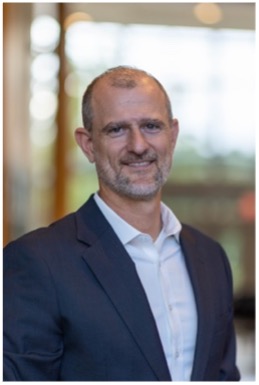 Todd Wilson
, our LEAD M.A. program director, is plunging right into the work: he will teach two courses in Spring 2027. The first is the required 2-credit online course LEAD 652 Strategic Management, which examines strategy through a Christian lens. Organized around five themes (Situation, Stage, Style, Strategy, and System), the course equips students to analyze an organization’s environment and life cycle, assess leadership and team dynamics, make clear choices about where to play and how to win, and connect strategy to execution. It closes with stewardship: a theological and ethical vision of strategy grounded in love, responsibility, and the common good. Students apply the framework to a real organization. Students in the European cohort will take the required 4-credit hybrid course LEAD 559 Organizational and Change Leadership, which explores the theory and practice of leading change in churches, schools, and ministry organizations. The course brings together a biblical theology of change and transition, tools for diagnosing an organization honestly, and the models leaders use to guide people through change, with Israel’s wilderness journey framing the semester. Students learn to distinguish technical problems from adaptive challenges, understand why people resist good ideas, and attend to the human experience of transition, not only the plan. Each student studies one organization across the semester and closes with recommendations for its health and mission.
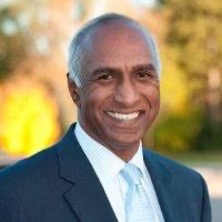 Junias Venugopal
 will be teaching the required LEAD 512 Leadership and Spiritual Formation to enable students to evaluate their life in four spheres, personal, family, work, and community/church. The text, Total Leadership, takes the strategy that the skills and behavior needed to succeed in these four spheres are the same and so we need to develop ourselves more synergistically than compartmentalize our life. This course provides a theological and theoretical overview of the role of a leader with people and organizations with a focus on selfleadership. As a result, we’ll focus on fostering the health, character, competence, spiritual maturity, and long-term godly faithfulness of those called to shepherd and lead His people.