Shakespeare Turns the Parables Upside Down
Wednesday, March 25, 2026 | 7:00 PM | Bakke Auditorium, Wade Center
 In "Shakespeare Turns the Parables Upside Down," Dr. Grace Tiffany explores how Shakespeare’s plays, like his Biblically literate audience, were deeply concerned with gospel parables such as that of the Talents, The Unjust Steward, the Wedding Feast, and, above all, the Prodigal Son. His plays’ plots invoke and often imitate these well-known stories. However, his plays contain no simple symbolic enactments of parables which are themselves allegorical and often confusing. Instead, Shakespeare creates characters who wrest the parables from their gospel contexts to support political ambitions, erotic quests, or simple reckless behavior. The plays expose the human tendency to twist scripture to unchristian purposes, but also suggest the difficulty of applying the Bible’s metaphors to life in the workaday world.
 In "Brutus and His Problems," Dr. Lee Oser explores the most basic rhetorical question in William Shakespeare's tragedy Julius Caesar: the dramatic irony of the audience's understanding the character's real moral position better than they do. This lecture will explore how Shakespeare establishes this situation in his three opening scenes before arguing that Brutus' impediments to self-knowledge reflect his historical situation. Finally, Dr. Oser reminds that Julius Caesar is a meditation on history itself, if we understand what history meant to Shakespeare.
 For the Fall Shakespeare Lecture, Dr. Benjamin Weber will explore two connections - one to the Boethian Christian humanism of the Middle Ages, the other to the Christian Neoplatonism of the Renaissance - to consider how Shakespeare offers up images of transcendence in his own work, pointing his readers towards God without always naming Him directly. While, the lecture focuses mostly on
 This presentation discusses how in
 The bestselling Victorian novelist, Charlotte Mary Yonge, edited, introduced, and annotated an edition of Shakespeare’s Henry IV, Part I for Church of England schools. Building upon Molly G. Yarn’s pioneering Shakespeare’s ‘Lady Editors’ (2022), this lecture will offer the first sustained exploration of Yonge’s editorial choices. The complacent dismissiveness of bowdlerized editions will be questioned and challenged. Yonge’s introduction and notes were focused on pointing out where Shakespeare’s play departed from historical accuracy. The scene summaries are lucid, and some wonderfully arcane knowledge is included in the notes. Charlotte Yonge’s own precocious and productive life becomes the backdrop and context for celebrating children and adults who love Shakespeare, Falstaff, and Henry IV, Part I.
  Although better known as an apologist, children’s writer, or medievalist, C.S. Lewis also engaged deeply with the works of William Shakespeare. In this talk, Dr. Waters will examine the different and varied ways Lewis explored Shakespeare (and his critics), and his reliance on Shakespeare as a frame of reference pointing not only to the immediate stories, characters, and themes, or even to his own extensive Renaissance learning, but using Shakespeare also to point towards The Story.
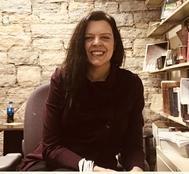 Dr. Dunn-Hensley, Associate Lecturer in English, will explore the spiritual dimensions of the play, arguing that Macbeth, rather than depicting a nihilistic vision of the world, which often appears in adaptations, productions, and scholarly analyses, instead presents a spiritual battle with a fully developed sense of God, good, and evil. The lecture features a live performance from Shakespeare's Macbeth by Jeff Cribbs and Jenn Miller-Cribbs, directed by Mark Lewis.
 For the inaugural E. Beatrice Batson Shakespeare Society Lecture,