Looking for Heaven on Earth: Remembering Alumna Luci Deck Shaw ’53
Luci Deck Shaw ’53 died on December 1, 2025, just shy of her birthday. She was 96 years old.
Words: Eliana Chow ’21
Photos: headshot courtesy Paraclete Press, other photos courtesy Wheaton College Archives
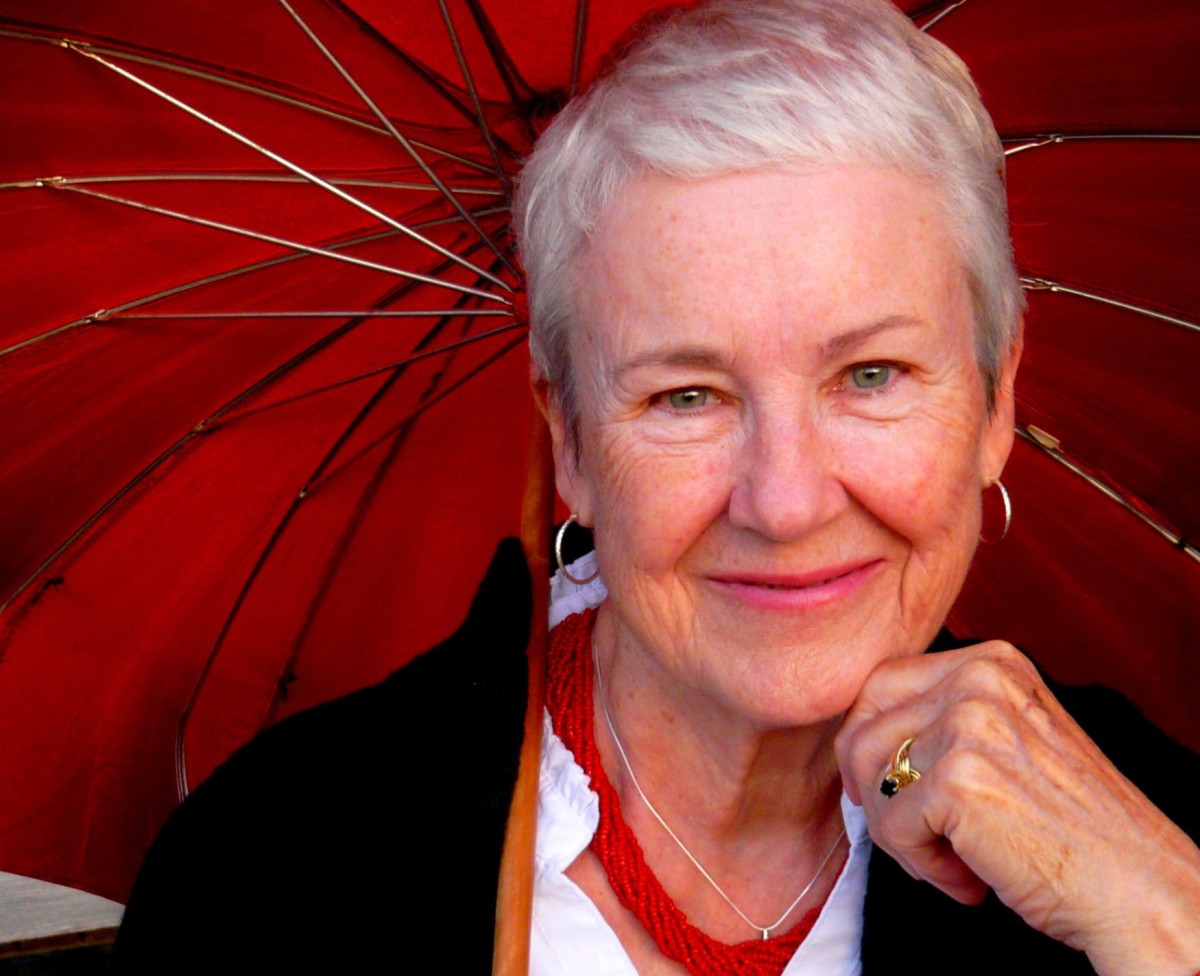
When the Marion E. Wade Center celebrated 50 years in 2015, Luci Deck Shaw ’53 was among the many artists and authors who filled the white stone building at the corner of Lincoln and Washington in Wheaton, Illinois. With her soft white hair cut into an elegant pixie, her gray beaded necklace, and her rich velvet blazer, her presence affirmed what so many said about her throughout her lifetime and after her death. Here was a woman with poise, a gentleness about her that balanced the sobriety with which she treated language. Here was a true poet with her quiet, powerful way of moving through the world, attentive to the beauty and gifts of the people around her.
“She had this authentic, genuine, luminous interest in every individual person,” said Wheaton College Provost Karen An-hwei Lee, who also holds the courtesy title of Professor of English and is a prolific poet. “That generosity of spirit is a theme that mirrors the sustained, profound, quiet radiance of her life’s work as a poet through her many collections and the communal hospitality found in her art.”
Luci Deck Shaw ’53 sits by the water as a student at Wheaton College.
Lee first met Shaw when they were mentoring at the Glen Workshop in Santa Fe, New Mexico, a program sponsored by Image Journal and designed for artists seeking to integrate faith and creativity. Lee’s first impression was of Shaw’s eyes. “I remember her sparkling eyes,” Lee said. “She just had such sparkling eyes and a lot of endearing curiosity about poets she hadn’t met and didn’t know yet.” The two women met for lunch one afternoon, and Lee recalls Shaw’s kind interest in Lee’s spiritual journey, academic life, and teaching at the retreat. “She wanted to meet me at my level,” Lee continued. “I never felt like she had a ‘persona.’ She was consistently and authentically herself with an air of gravitas that was never pretentious. I felt like the Luci I had encountered in her poetry was the same Luci I was seeing across the table from me.”
Shaw was born in England in 1928, the daughter of British medical missionaries. She lived with her family in Canada and Australia throughout her childhood and teen years before moving to the United States to attend Wheaton College in 1949, graduating with high honors in 1953. After graduation, she married Harold Shaw, with whom she had five children. Together, they stayed in the Wheaton area to worship, work, and raise their family. In 1968, she co-founded Harold Shaw Publishers with her husband and served as its vice president and senior editor. She maintained written communications with the publishing house’s writers (including one of her dearest friends, Madeline L’Engle, the author of, among other works, A Wrinkle in Time) and became a guiding influence for many Christians in the publishing and literary industries. When Harold died from lung cancer in 1986, Shaw took over the presidency for the company until 1993, then stayed on as a senior editor until it was sold to Random House in 2000.
Harold Shaw and Luci Deck Shaw ’53 ring the Wheaton Tower bell to announce their engagement.
While an undergraduate English literature major with a New Testament Greek minor at Wheaton, she studied with Dr. Clyde S. Kilby, who became like a second father to her and many other students who found themselves far from home. “Dr. Kilby had a gift for friendship, and he and his wife brought Luci into that warm orbit,” said Marjorie Lamp Mead ’74, who also studied under Kilby and served at the Wade Center in various capacities over 50 years, including as Associate Director. “People talked about Dr. Kilby pointing them to things. That’s what so often drew people to him. Their imaginations and communities widened because of knowing him.” Shaw would recall in later interviews Mrs. Kilby’s apple turnovers and the warm glow of lifelong fellowship and mentorship she found with the couple. Shaw made them honorary grandparents to her own children.
Shaw cared deeply for the nature of Wheaton’s literary and artistic legacy. In 1978, she joined the Wheaton College Alumni Association Board of Directors. Toward the end of her three-year term, she joined the Steering Committee for the Marion E. Wade Center, playing a key role in establishing the center as a place for artists and writers to discover the richness of the Wade’s seven authors. For many years, she was editor of the Wade’s journal, VII and she and her husband Harold often hosted students and other guests with the Kilby family.
She also served as the editor for multiple literary journals such as Radix, taught adjunct at Regent College (Vancouver) and New College Berkeley, and worked as an English stylist for various Bible translations including The Message and Today’s New International Version. She served on numerous boards to support learning and the arts, including Christians in the Arts Networking, Christian International Students Foundation, and Image Journal.
She traveled extensively to lead workshops for poets of all ages around the country. Many of the letters Luci received, now entrusted to Wheaton College Archives and Special Collections, were thank you notes from these students, expressing their admiration and gratitude for Shaw’s time, erudite teachings, and thoughtful feedback on their creative work. Shaw almost always took the time to reply with her neat, upright cursive in blue or red ink. Others who wrote to her seemed very free to be themselves, including asides about the soup simmering on the stove, the strange weather, or family photographs that wouldn’t scan, in between more serious updates on family, career, and spiritual life. Shaw wrote similarly to her mother, from her days as a college student through to the end of her mother’s life, sending mail all around the world to wherever her parents’ ministry took them.
She was a remarkably successful woman by the world’s standards, juggling each of these roles with being a faithful wife, mother, and active member of her church, not to mention major transitions throughout her life. Yet there was a core thread of hope running through all of this for Shaw. “You could just tell she was a Christian believer,” said Lee. “She wore it on her sleeve, so you just knew the Holy Spirit was in her.”
Like many writers, she processed her world through the written word from a young age. She began writing poetry at age five and never stopped. Her parents read aloud to her and her brothers and sisters while they were growing up, opening the children’s imaginations to great works of classical fiction and poetry. In a conversation with The Rabbit Room, conducted over a year before she died, Shaw recounts how she started writing poetry around age six, scribbling verses on small scraps of paper to show her father, who loved Romantic poets like Wordsworth and Coleridge. “He would show them to his friends,” she told the host. “He was just so proud of his daughter and that was a great encouragement to me.” But in an interview with Image Journal in 2012, she shared that her parents had hoped she would follow in their footsteps and become a missionary in some capacity. “But that was their vision, not mine,” she said. “And I dove into literature like it was a swimming pool.”
Clyde Kilby and Luci Deck Shaw ’53 outside Kilby's Washington Street home, now Kilby House.
Throughout her prolific career, Shaw wrote or edited dozens of books including poetry collections and the spiritual memoir, God in the Dark: Through Grief and Beyond (Regent, 1989), which documents her journey through Harold’s diagnosis and the deep grief that followed his death. She wrote and sent out Advent poems to her family and friends—starting in childhood and continuing the tradition into her adult life—which were later published in the collection, Accompanied by Angels (Eerdmans, 2006). Her work was gathered into numerous anthologies and published in countless literary journals, and her poems continue to ignite the imaginations of readers around the world. “Luci possessed and expressed the full spectrum of human emotions,” said Lee, when asked to provide a literary critique of Shaw’s work. “At the same time, there’s something very irenic about her work. You know when you read a Shaw poem that there is more to this life than what we see in front of us.”
Lee likens Shaw’s work to that of the late celebrated poet Mary Oliver, who wrote primarily of nature and the role of the spiritual in our multifaceted human lives. Neither poet shies away from pain in her work, even as she looks earnestly for the beauty hidden behind the ordinary. Even in her poems written following the deaths of Christian loved ones in Shaw’s later years, there is a quality of joy and the power of the resurrection in her words. “I love the way you can pray through a Luci Shaw poem,” said Lee. “Shaw is always pointing to salvation, to eternity. Her poems say there is more than this life, more than death having the final say. There’s a hopefulness amid all that pain and suffering, and that bleeds through Shaw’s poetic voice.”
Perhaps Shaw could be so certain of hope and bring that faith so boldly to her readers because she had walked through the valley of suffering. “I think she had learned to approach God authentically and transparently,” said Mead. “To bring to him what was in her, to not be afraid to raise hard questions, and to be comfortable whether in lament or praise.”
Luci Deck Shaw and Harold Shaw return to Wheaton for Luci's 40th Reunion in 1983
In 1991, Shaw married John Hoyte and later moved out of Illinois to Bellingham, Washington, where she lived the rest of her life, occasionally returning to Wheaton for reunions and guest lectures. In 2003, she was Wheaton College’s Alumna of the Year for Distinguished Service to Society, awarded for her authorship, commitment to teaching, and enduring example of faith.
“Luci Shaw was a woman whose writing and career were profoundly shaped by her faith in Jesus Christ,” said Wheaton College President Philip Ryken ’88. “Her life is a rich example of how we hope our alumni continue to encounter the Lord even when they’ve moved on from our campus. We celebrate the work the Holy Spirit continues to do through her work and praise God for her new heavenly home, even as we grieve our own loss of her earthly friendship.”
The beauty of Shaw’s spirit lives on through her work, which often revealed her care for creation, from the spider to the whale—from a single ripple in a puddle to the awes of the unknown universe. Through her letters, interviews, workshops, and published work, she is revealed to be someone who sought the Lord constantly, even in the depths of grief and in the challenge of a busy career and frequent moves, receiving his consolation in incredible ways as documented in her spiritual memoirs. She kept noticing, kept writing, and kept maintaining relationships with all the Lord placed in her path, who shared her griefs and joys as if they were their own.
“Luci is a living benediction and testament to a life lived faithfully and lived well,” said Lee.