

New Wheaton College Faculty Publications for Fall 2026
Wheaton College recognizes and celebrates the books Wheaton faculty have published in recent months. Learn more about the books below.
The Prophets by Dr. Andrew T. Abernethy (Baker Academic, 2026)
 Many Bible readers struggle with the prophets. The historic setting, the genres, and the imagery are all unfamiliar. Yet these books are a vital part of Scripture. The same living God who inspired these messages still speaks an important word today.
The prophets deeply challenge our assumed ways of thinking, confronting us with the seriousness of sin as well as God’s holiness and grace. In The Prophets, respected scholar Andrew T. Abernethy guides readers through the historical, social, literary, and theological dimensions of each prophetic book: Isaiah, Jeremiah, Lamentations, Ezekiel, Daniel, and the Minor Prophets.
The Prophets is part of the Baker Handbooks on the Old Testament Series. This theologically and pastorally rich series is designed for a new generation of readers who want concise and understandable guides to the books of the Old Testament. Neither introductions nor commentaries, each volume provides section-by-section guidance through each book of the Bible to help readers quickly grasp the content and meaning of each passage. These guides also help readers see the overall logical flow of each book and include helpful maps, charts, and sidebars that provide valuable additional insights.
Of Gods & Idols: Reflections on Old Testament Political Theology from South of the Border by Dr. M. Danny Carroll R. (Baylor Press, 2026)
 Of God and Idols: Reflections on Old Testament Political Theology from South of the Border explores the nature and phenomena of the religious life in ancient Israel through the lens of Latin American history, religion, and literature. On the one hand, this lens can provide insights into what we read in the Old Testament and so can be helpful in being aware of and evaluating the relationship between religion and politics today. This is not a full-blown political theology, hence the subtitle: Reflections on Political Theology. On the other hand, one aim of the volume is to underscore the usefulness of a Latin American point of view. Usually scholarship turns east to Europe and misses this contribution.
South Asians on the Move: Global Witness of the Dispersed Christians edited by Dr. Sam George and Dr. John Daniel (SAIACS Press, 2026)
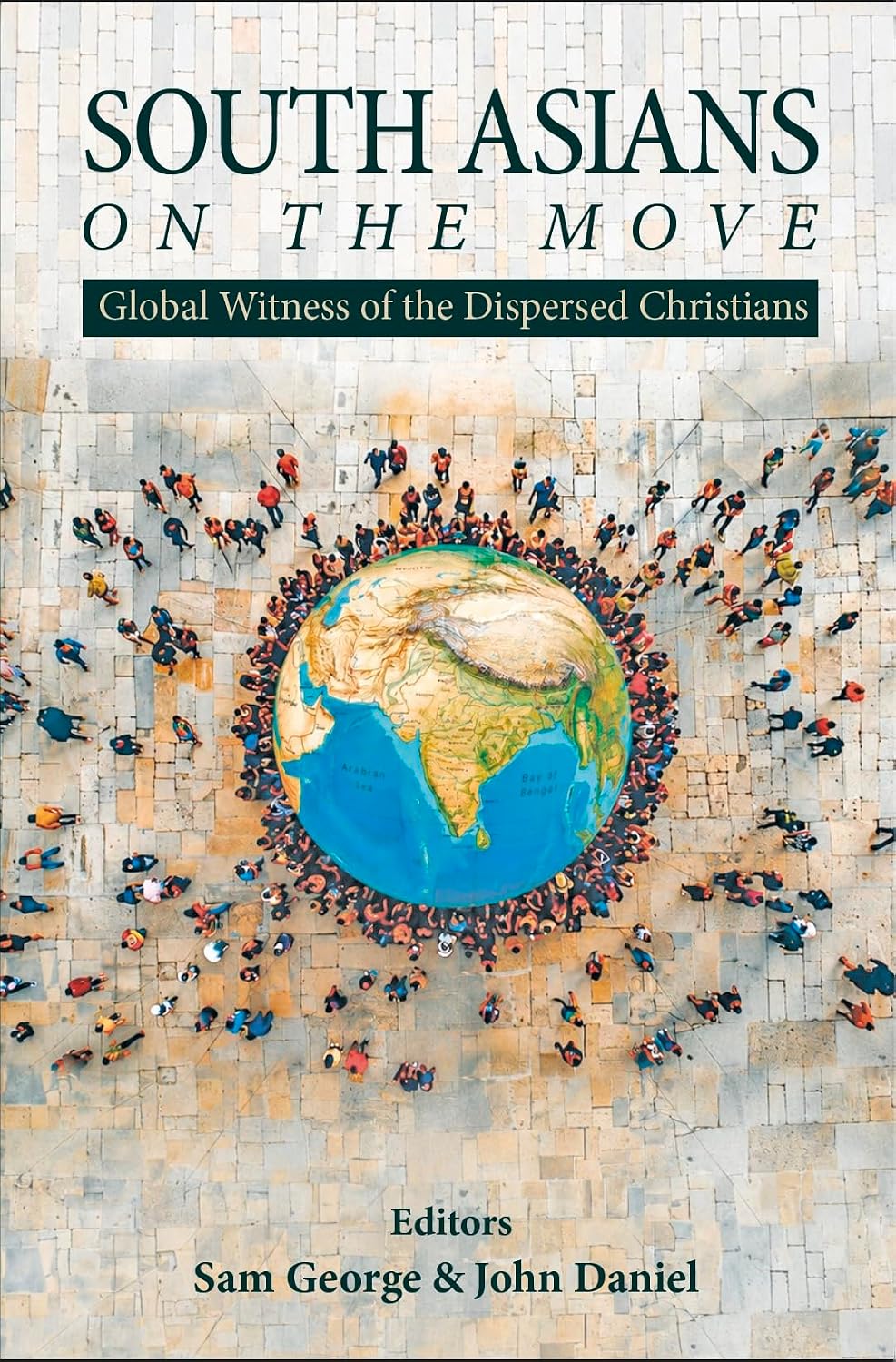 The sun never sets on the South Asian Christian diaspora. South Asians are everywhere today. People from India, Pakistan, Nepal, Bangladesh, Sri Lanka, and other parts of South Asia have crossed national borders to live in countries across the world. Together, they constitute one of the largest and most widely dispersed migrant populations in the world. Among these migrants are Christians whose faith, ministry, and witness are reshaping communities far beyond South Asia. South Asians on the Move: Global Witness of the Dispersed Christians explores the diverse Christian ministries emerging among South Asian diaspora communities and examines the missional opportunities arising from this unprecedented movement of people. The contributors to this volume come from diverse backgrounds and locations, offering perspectives shaped by their own experiences among South Asian communities around the world. The book also includes contributions from non-South Asians who have served and ministered among South Asian communities for many years. At the heart of this volume is Jesus’ charge to his disciples to be his witnesses “to the ends of the Earth” (Acts 1:8). Today, that mission is being fulfilled through people who are from everywhere, to everywhere. South Asians on the move are at the forefront of significant transformations taking place in global Christianity and world mission. If we reach and engage South Asians, we can reach the entire world. This volume will be valuable for pastors, missionaries, mission leaders, theological educators, students, diaspora ministry practitioners, and anyone seeking to understand the relationship between migration, Christianity, and global mission.
Models for a Multicultural Church: Five Motives That Shape Your Church’s Cross-Cultural Engagement by Dr. Eunice Hong and Dr. Kenneth Nehrbass (Baker Academic, 2026)
 Practical Guidance for Understanding and Assessing Your Congregation’s Multicultural Posture
In a world where conversations about diversity are often met with both hope and skepticism, it can be difficult to know how to lead a church in cross-cultural practices that faithfully reflect the kingdom of God in its multiethnicity.
From leadership structures to music and preaching styles, cross-cultural ministry postures vary widely and don’t always reflect local demographics. Kenneth Nehrbass and Eunice Hong identify five key motives that shape how a congregation engages across cultural and ethnic lines:
● Multiculturality—How intentionally does your church represent multiple cultures in its leadership, worship, and everyday community life?
● Oneness—Does your congregation lean toward unity above cultural distinctiveness or does it try to hold space for both?
● Togetherness—Are members genuinely connected across cultural lines—sharing meals, ministries, and friendships—or mostly coexisting?
● Inclusionary Vision—Does your church’s stated mission actively aim to reach and include multiple ethnic groups or is diversity assumed rather than pursued?
● Ethnic Diversity—How closely does your congregation’s makeup mirror the diversity of the neighborhood around it?
These five motives combine in different ways to produce one of seven distinct cross-cultural postures—some blending multiple cultures into shared worship and others centering on one dominant culture, with several variations in between. To help leaders discern where their own church falls, the authors introduce the Cross-Cultural Posture Assessment Tool, a research-based instrument built from their study of real congregations that helps congregations discern their current approach. Importantly, they argue that no single posture is inherently better than another; the approach should fit the church’s calling, context, and constituency.
Each chapter includes reflection questions, recommended reading, and practical tools, along with callout boxes, charts, and images. With a foreword by Derwin L. Gray, this book translates research and real-world insight into practical guidance for anyone leading—or hoping to lead—a church toward faithful cross-cultural ministry.
Karl Barth and the Idolatry of the Nation: Confronting Christian Nationalism by Dr. Keith L. Johnson (Baylor University Press, 2026)
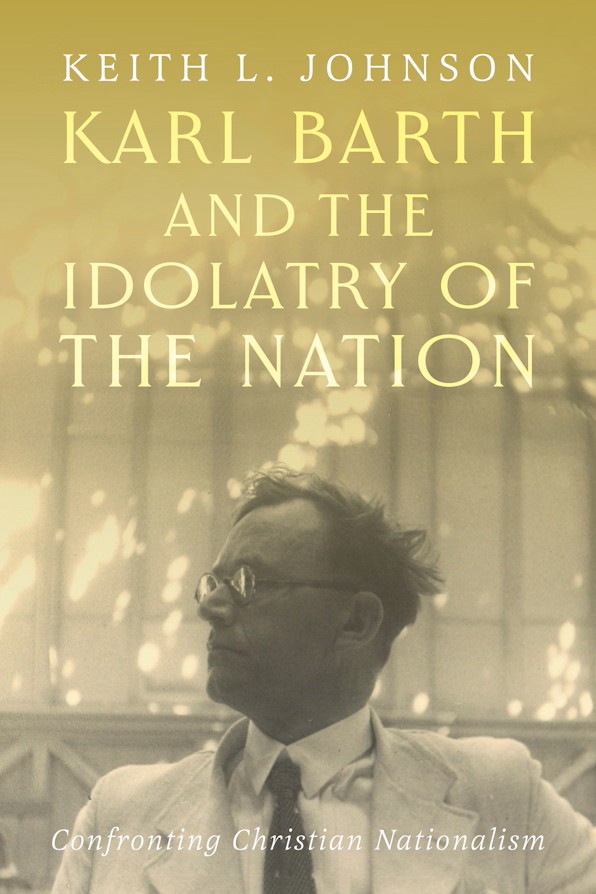 Karl Barth and the Idolatry of the Nation: Confronting Christian Nationalism tells the story of Karl Barth’s theological resistance against German nationalism in the period 1930-1935. In the early 1930s, German Christians fused the Christian gospel with their own national identity by telling a story that placed Germany at the center of God’s purposes for history. They merged loyalty to God with loyalty to the state, blurred divine and national identity, and replaced God's law with human law.
Barth spent years resisting this false theology. The content of this resistance is presented in a fast-paced narrative built upon close attention to Barth’s sermons, lectures, essays, letters, and church-political meetings. These writings and actions are situated directly in the context of the rise of Adolf Hitler, the Nazi Party, the German Christian Faith Movement, and the Confessing Church. The book explains why Barth believed that Adolf Hitler did not create but simply exposed the German church’s theological crisis: a centuries-long theological “both-and” method that set Jesus Christ alongside other authorities and left the church vulnerable to false gospels. Against this captivity, Barth called the Protestant church back to the Reformers’ “either-or” decision for Christ alone, defended the freedom of the gospel, and summoned the church to a theological existence determined solely by the risen Christ’s address through Scripture.
The book’s implications are not information or imitation, but transformation. If the path Barth walked with the Germans feels hauntingly familiar in the United States, the driving question facing readers is Barth’s own: what must the church become in order to remain faithful to Jesus Christ?
.